Pursuit to Surrender
“I was dull, obtuse, stupid as an ox. But I stayed close to you, and you took my hand. ”
This pair of verses on the screen in this version from the Psalms is one of my favourite scripture texts. We’ll come back to this text but I do I see it as a bit of a summary of the journey in faith I’m going to share.
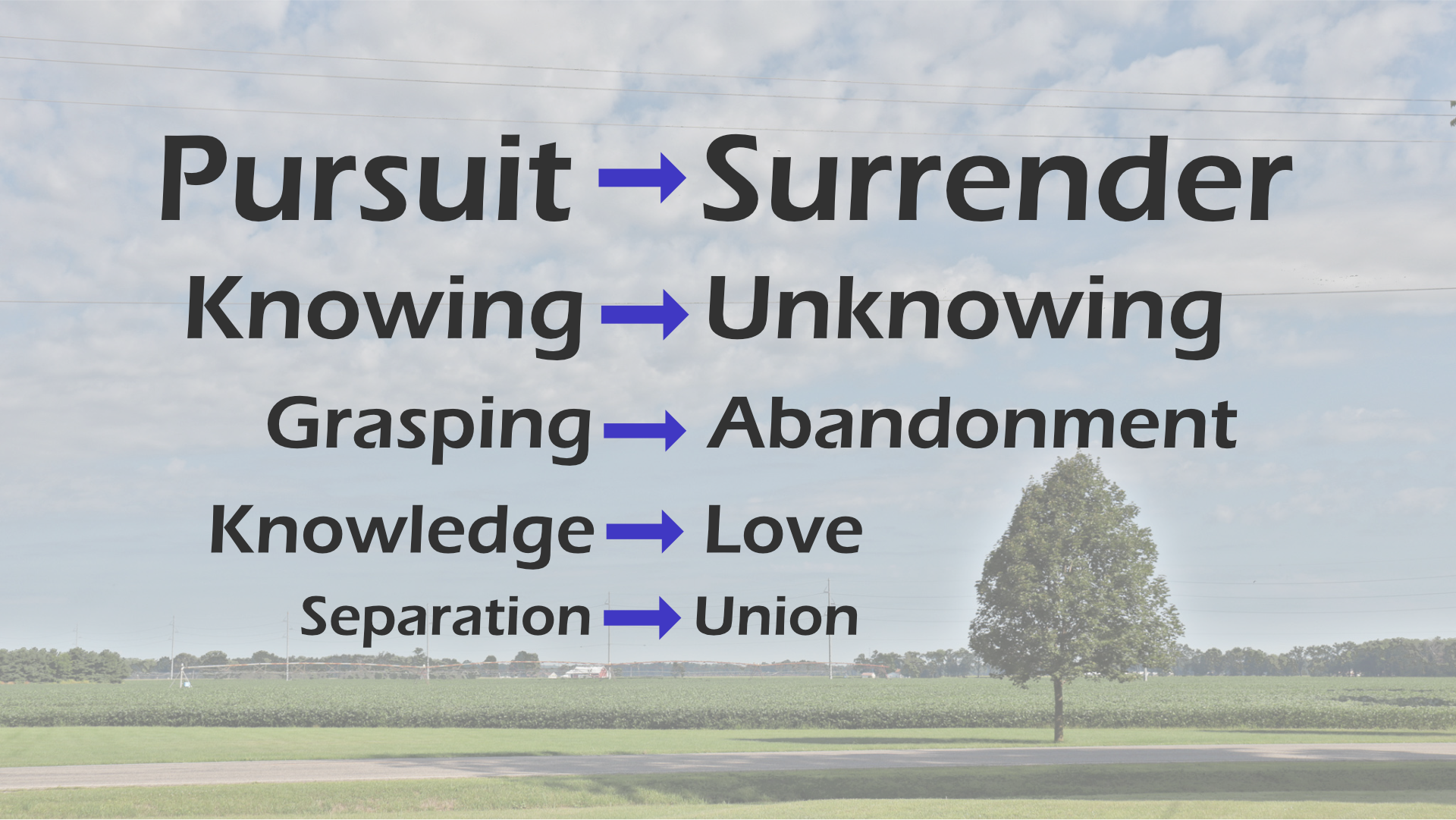
I’ve called my talk this morning “Pursuit to Surrender” which could be a talk about current US foreign policy but is rather, a talk about my spiritual journey. As you can see, I’ve given it a few optional titles, “Knowing to Unknowing”, “Grasping to Abandonment”, “Knowledge to Love”, and “Separation to Union.” The ideas in those alternative titles will appear in my talk, but I will begin with pursuit to surrender.
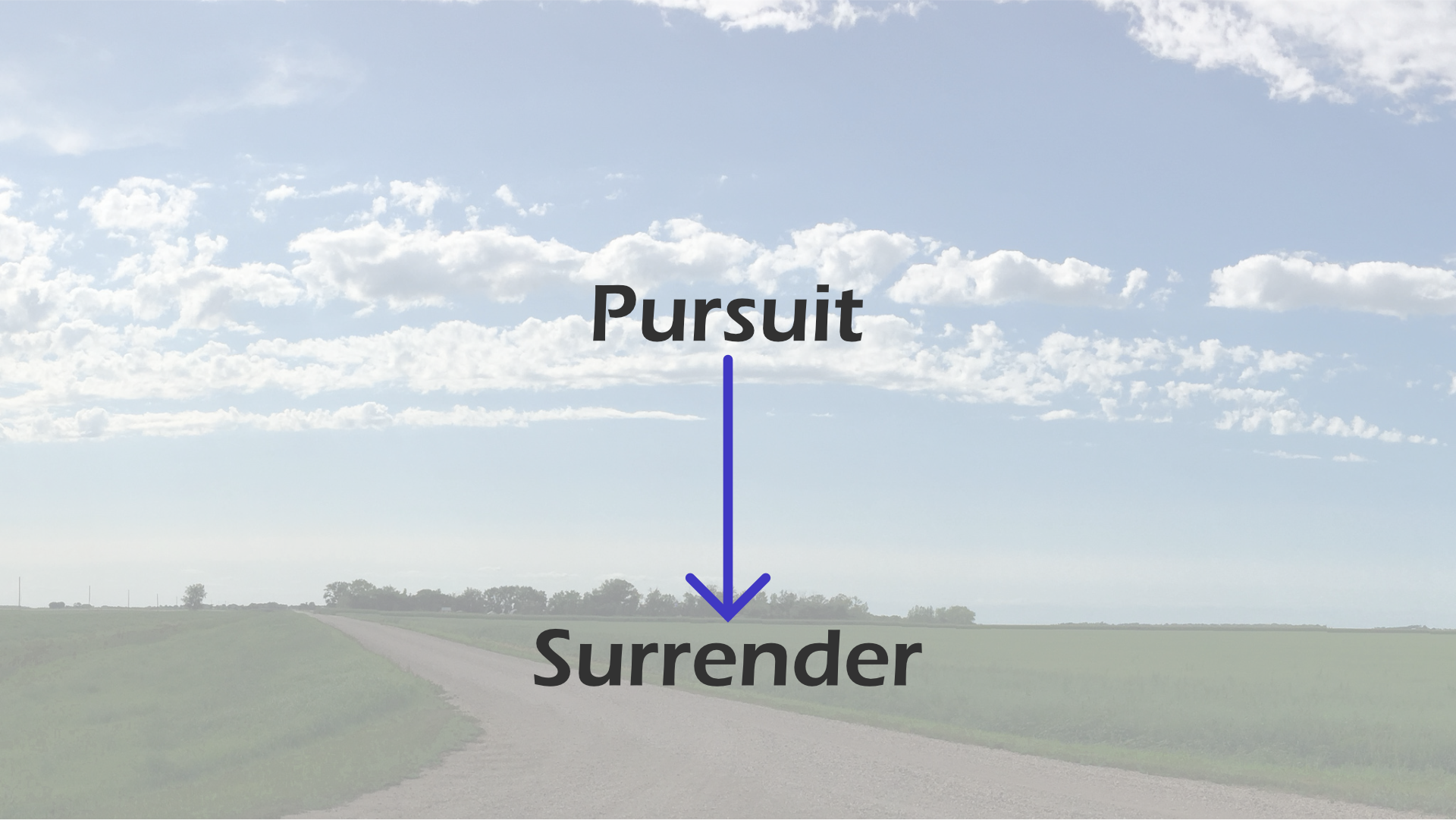
Now a journey usually entails moving from one place to another implying you leave one thing behind to get to the next thing. From point A to point B. But that doesn’t feel like my journey at all.
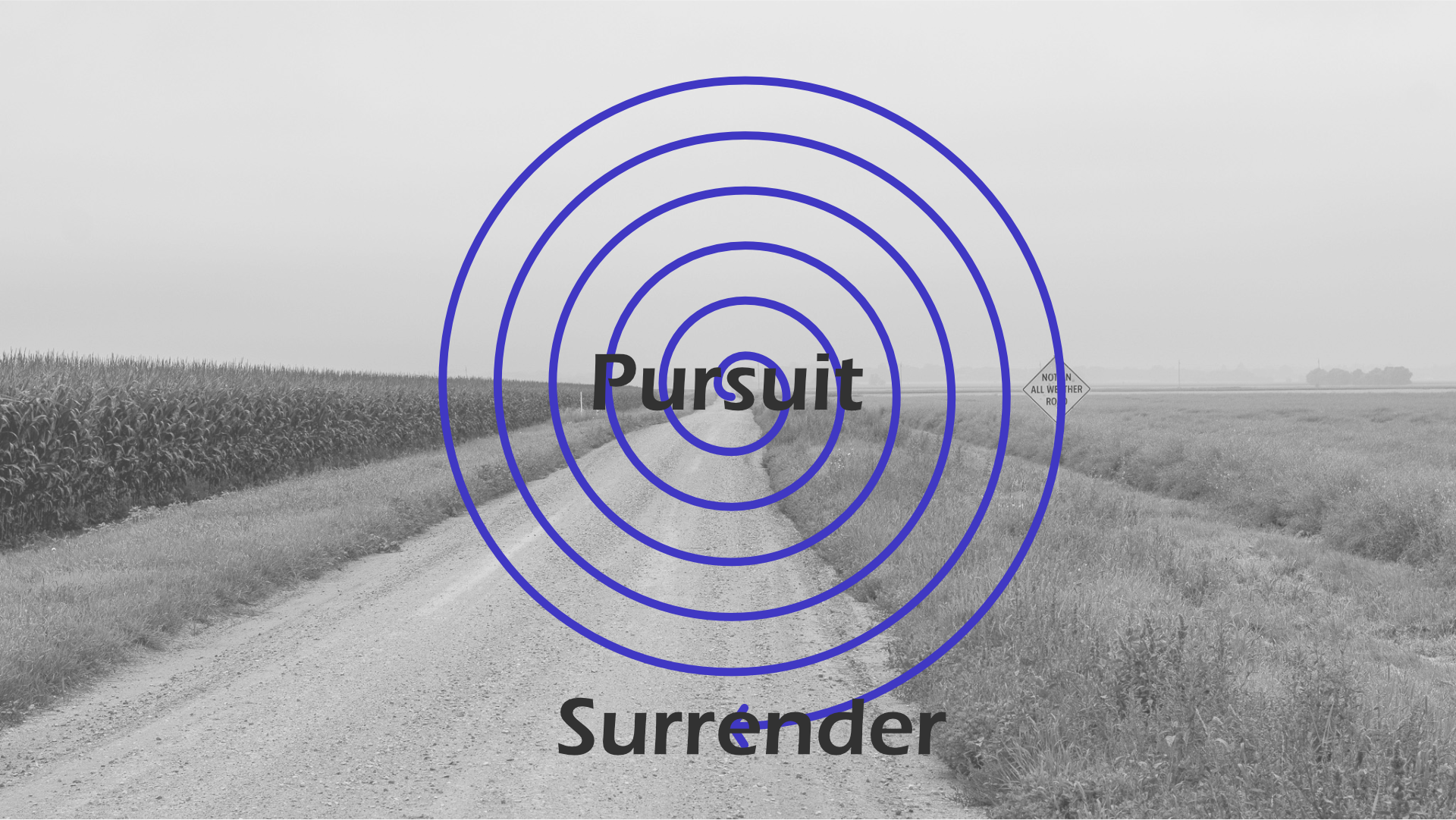
I think the spiral may a better depiction of this journey. What I like about the spiral is it isn’t about moving from one point to another but about being in the tension between these opposing forces. The center point of the spiral, pursuit, is the gravitational draw pulling me back and keeping me from flying off into space. The other energy of the spiral is movement pulling me further and further out, but never beyond the pull of gravity. The gravity gets weaker the farther you go, but it is still shaping your movement.
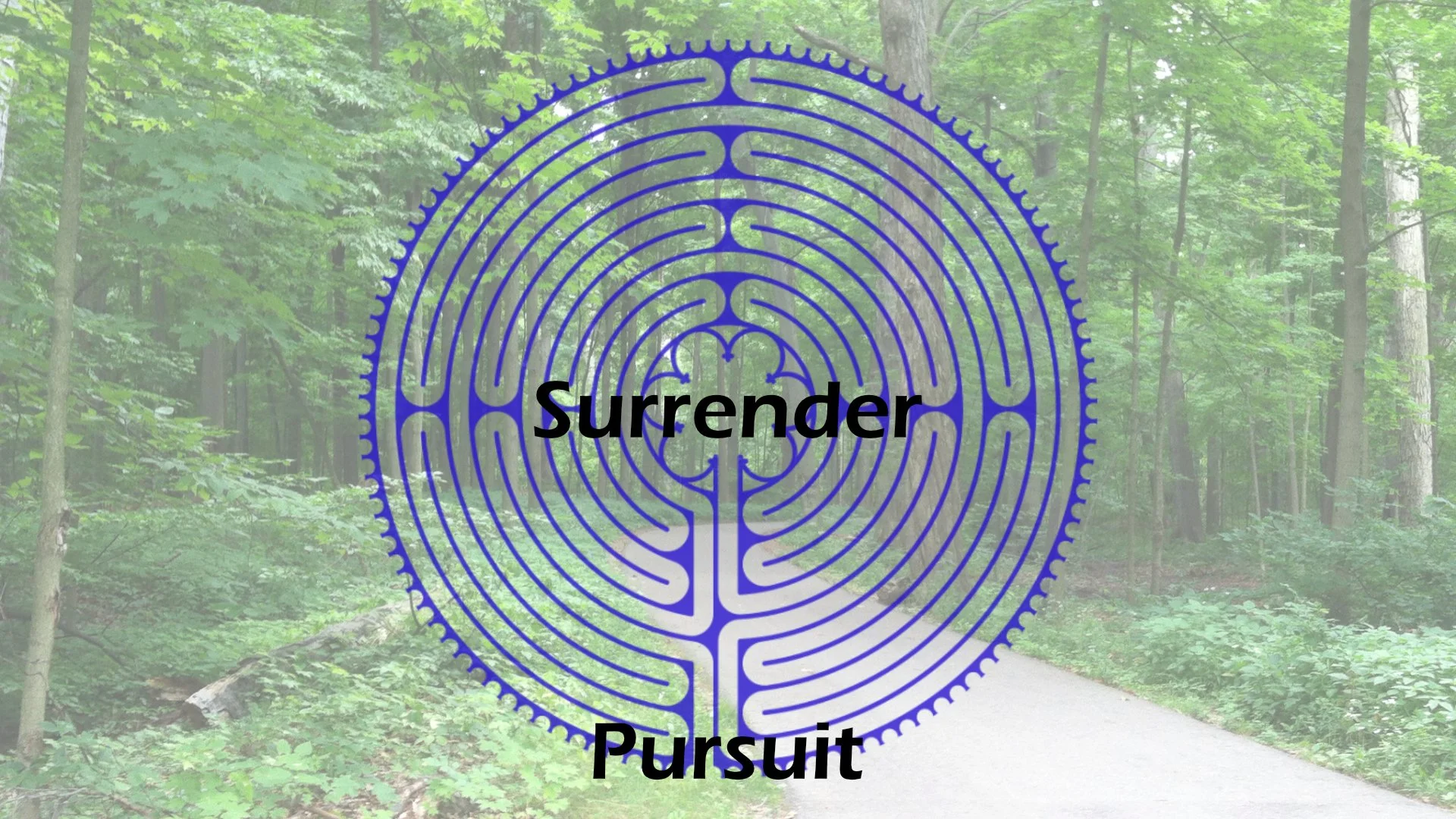
Perhaps the journey looks more like a labyrinth. There is only one path in, but at times in the journey you are closer to the centre and at times further away and the best that you can do is rest in the way set before you. Honestly, there are all sorts of different ways to depict this journey, and none are perfect.
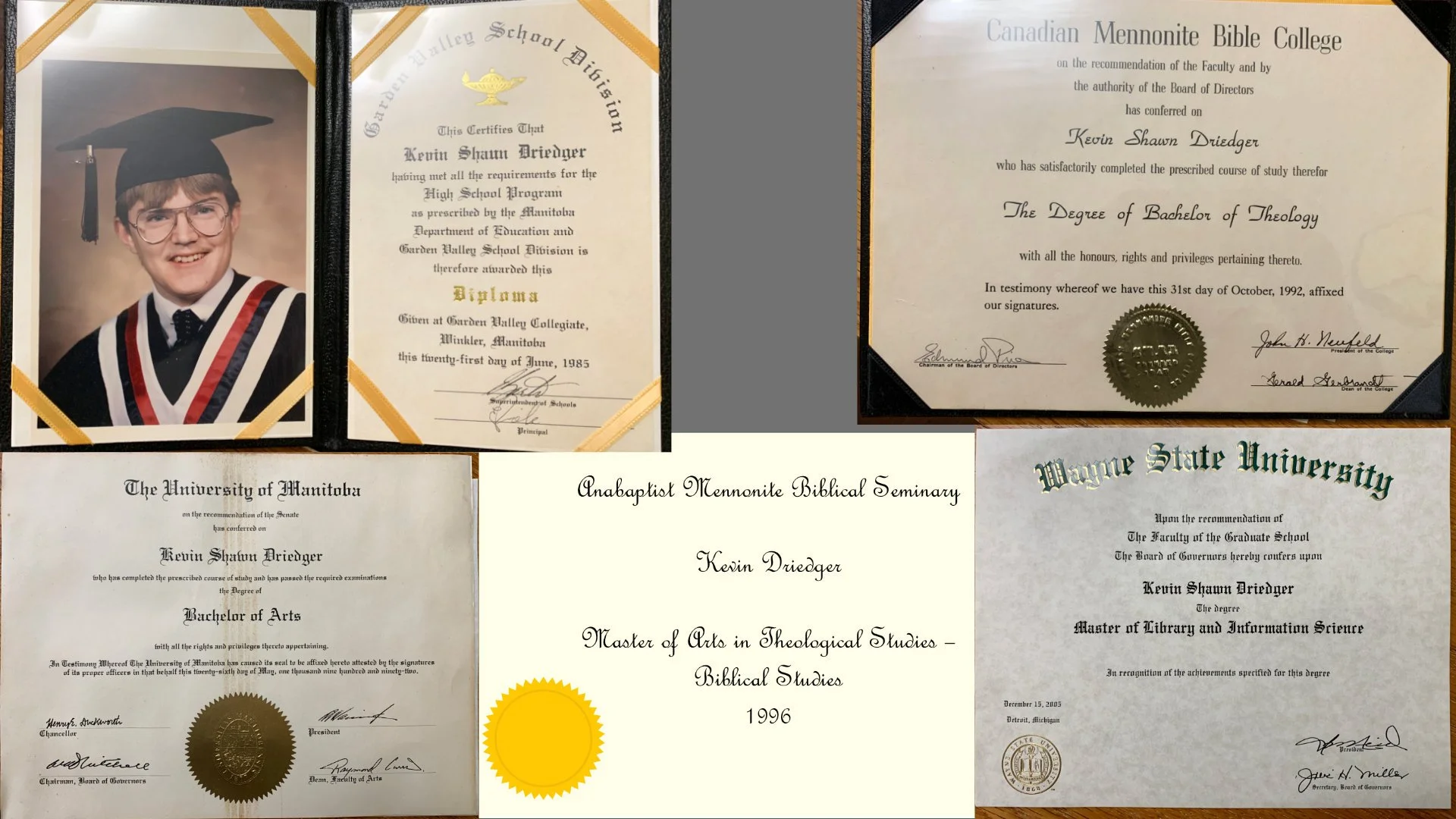
This is my high school diploma from Garden Valley Collegiate, and my Bachelor of Theology from CMBC, and my Bachelor of Arts (religion major and anthropology minor) from the University of Manitoba, and I seem to have misplaced a diploma, but I received a Master of Arts in Theological Studies – with a focus in Biblical Studies from Anabaptist Mennonite Biblical Seminary, and finally, a Master of Library and Information Science from Wayne State University. And yes, I have in the past considered doing a PhD, but never very seriously.
As is evident from all these diplomas, I’ve spent a good portion of my life pursing knowledge in a formal, structured way within academic disciplines. I’ve also spent a good deal of my life pursuing knowledge in less structured and more personalized ways. This pursuit has been and continues to be a joyful and exciting part of my life and has made me who I am today. Who doesn’t like learning new things and understanding new ideas? Knowing about gravitation and centrifugal forces helps me understand spirals which helps me create a model to understand my spiritual growth.
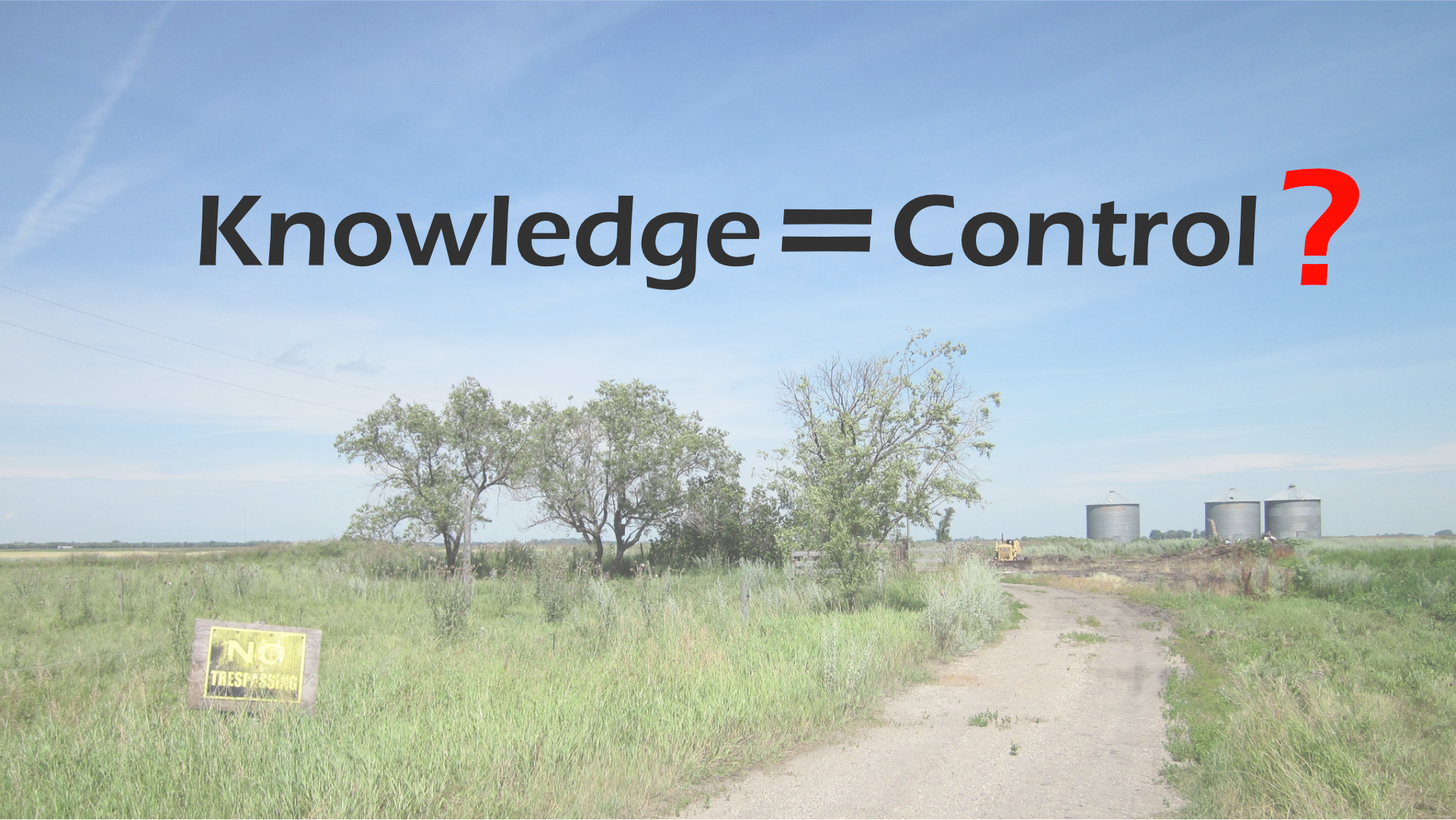
We humans have a natural urge to understand, define, and secure our world. The pursuit of knowledge is about understanding and making meaning of our life and existence. Life and reality are much easier to deal with when we have a way of understanding them. Explaining issues of life and faith make life and faith manageable and under control. We don’t like chaos. We don’t like things happening for no reason. We long for certainty. We long for control.
Our modern scientific worldview has given us a prescribed framework or lens with which to look at the world and make meaning of the world. In this worldview everything that exists must be measurable (more or less) it must exist in some material manifestation. What exists are me, and the other things or objects that are not me. We are separate. Everything that is not me, including God, is an object to be studies and understood. This understanding has shaped our modern, largely protestant faith, and shaped our understanding of God.
This worldview which shapes all part of western life, and which I have absorbed and live with. It is all fine and good, but it just doesn’t feel complete. It’s like me trying to find a visual model to depict my spiritual journal. Each one is accurate, but not complete. This worldview, built on objectivity where everything is separate from everything else fosters a sense of isolation and anxiety.
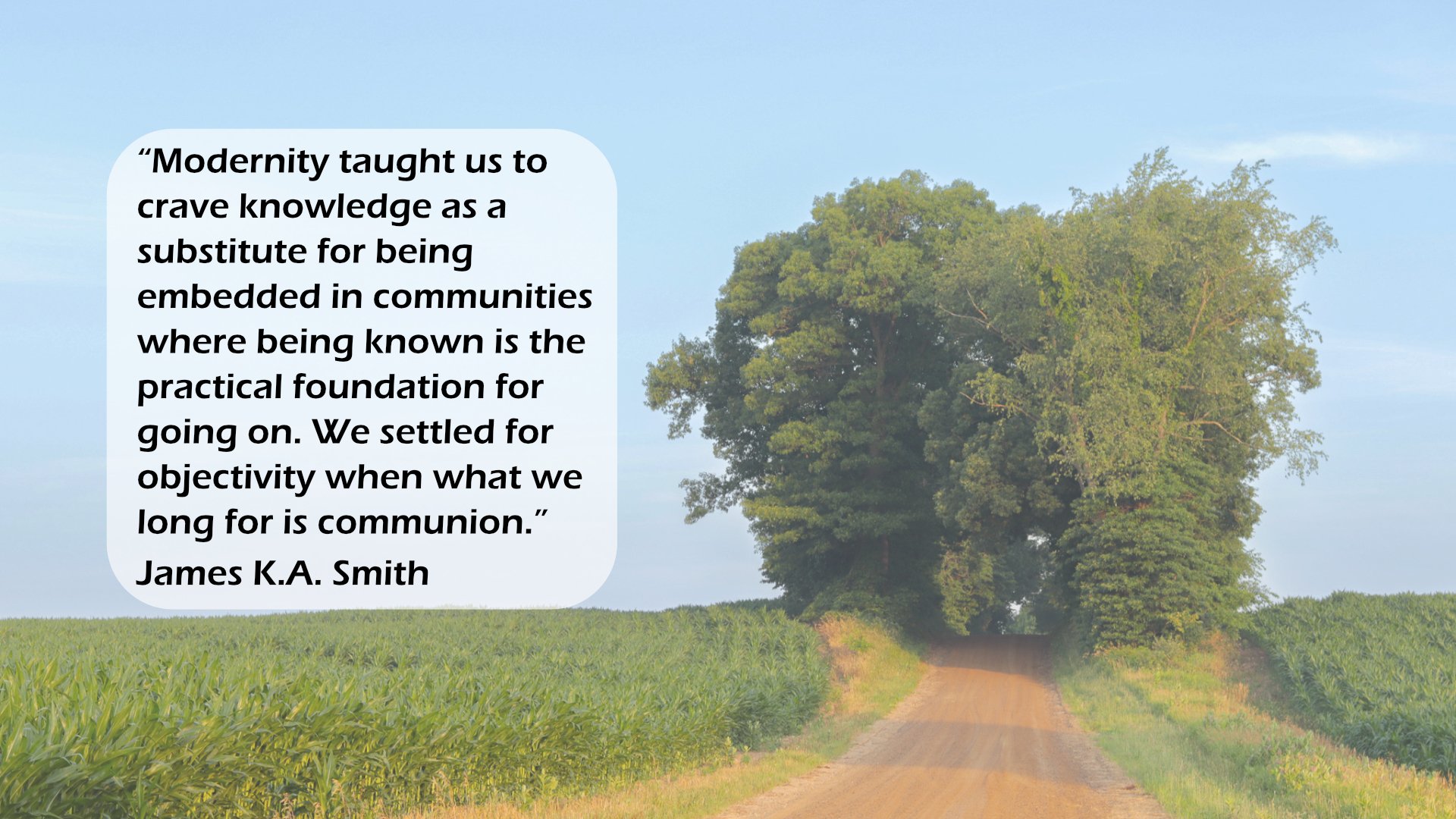
It was in seminary where knowledge started becoming more of a heart or soul thing. My professors were highly trained, well-regarded academics, and the courses were rigorous, but the professors also modelled knowledge expressed in worship and prayer. The emphasis was both on academic rigour and spiritual formation not as parallel tracks, but as interdependent approaches. Seminary was also a place where my understanding of and experience with more contemplative approaches to faith began to grow.

After finishing there I eventually entered an into ever-more meaningful relationship with the oft-mentioned contemplative retreat centre, (The Hermitage) a growing connection to contemplative practices, spiritual direction, and spending more time and thought with early, and current Christian mystics and their writings.
This journey of mine began to reshape my relationship with and perspective on God. The closer we come to God, the more we discover that God is not an object we can possess. I’ve become increasingly attached to the image of Job and his relationship with God immediately after his ordeal is complete and he has face God’s fierce and lengthy interrogation. “Where were you when I laid the foundation of the world?”
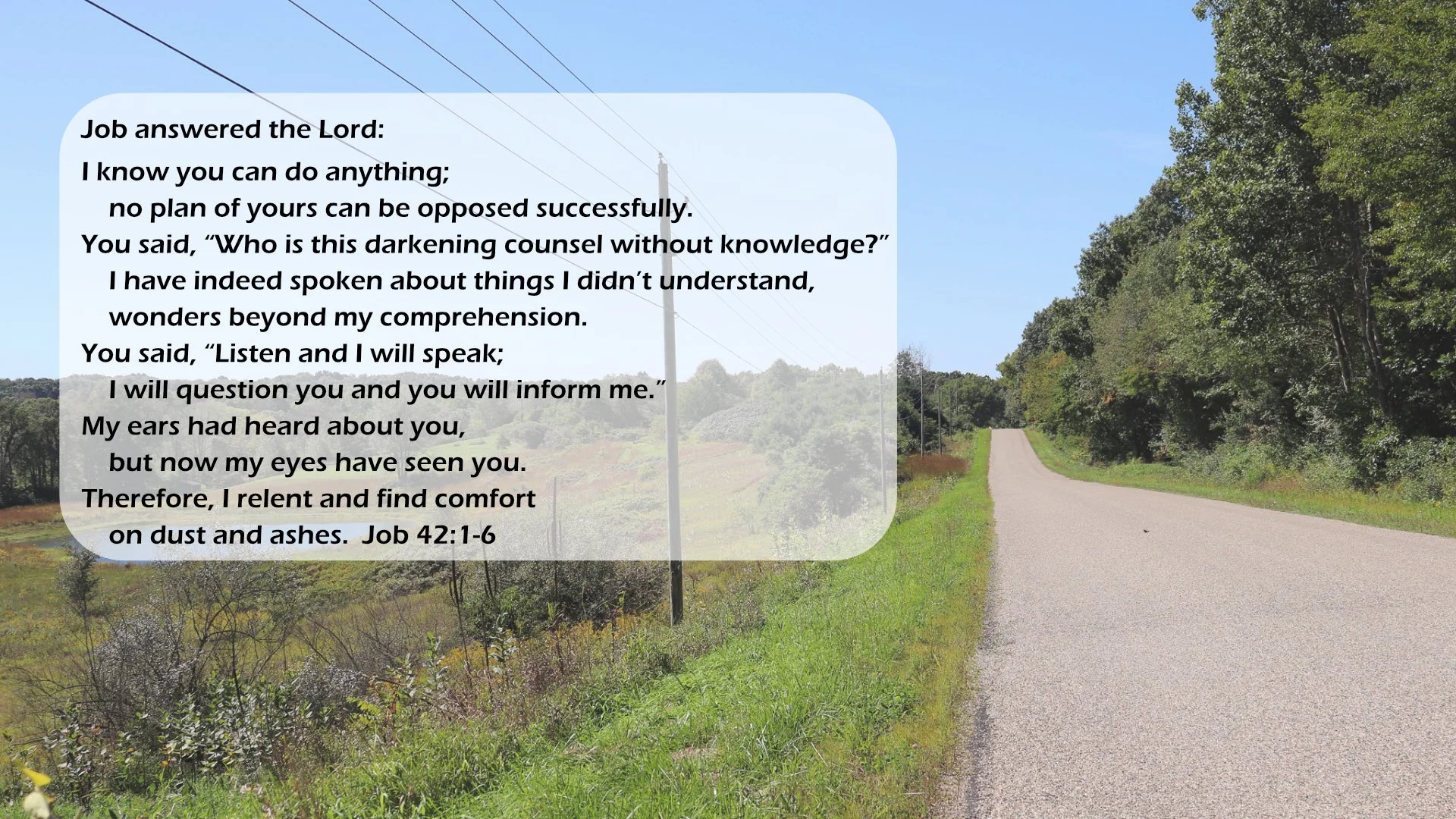
“I have indeed spoken about things I didn’t understand, wonders beyond my comprehension. There I relent and find comfort on dust and ashes.” Job teaches me that God is God, and God will do what God will do. This isn’t an excuse for a capricious God. I’m not saying aspects of Job aren’t challenging. But it is a reminder not to make God too small, and reasonable, and understandable. Our relationship with God is not a relationship of peers, but of creator with created.
As we dive deeper into scriptures, we see that knowing about God/knowing God is often depicted not as something achieved by the searcher but as a revelation gifted by God
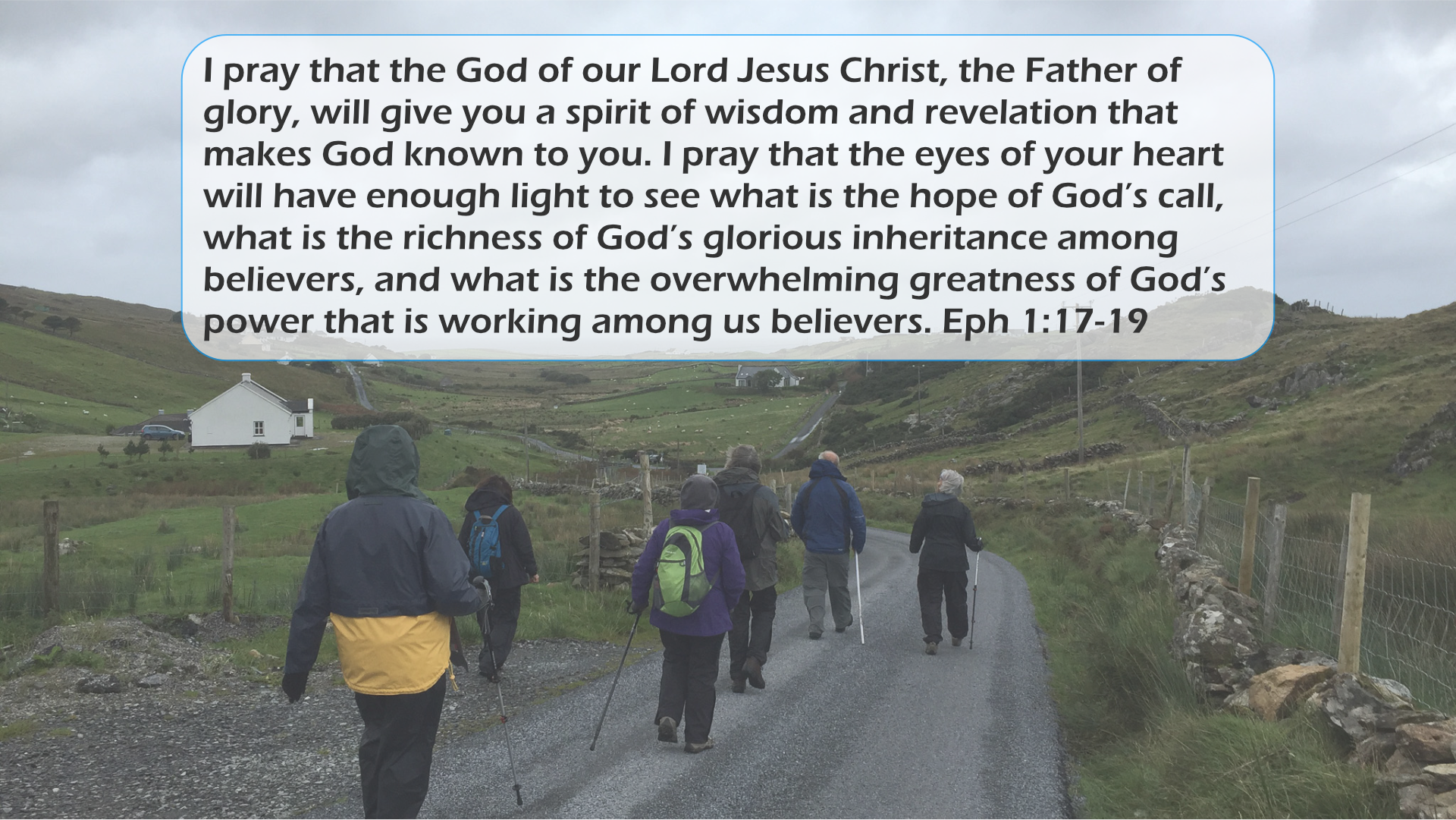
I am very aware that my thoughts and my mind are much too limited to comprehend all that is. If everything is ultimately explainable to the human mind, as the western scientific worldview believes, we live in a very tiny universe. But mostly I’m aware of the limitations of my understanding or conception of God. Any thoughts I have about God are simple thoughts that try to make the unknowable and uncontrollable knowable and controllable. Pursuing knowledge about God can only go so far. Beyond that we move into the Cloud of Unknowing.
The Cloud of Unknowing is a book written by an anonymous British monk in the 14th century. It is about when the Christian life goes so deep it moves beyond our ability to understand or know. The Cloud of Unknowing is that place beyond intellect where God is encountered by blind love. To get here, according to the author, we go through the Cloud of Forgetting where we forget all past memories and conceptions about God. We leave our past notions of God behind and approach God with nothing but love.
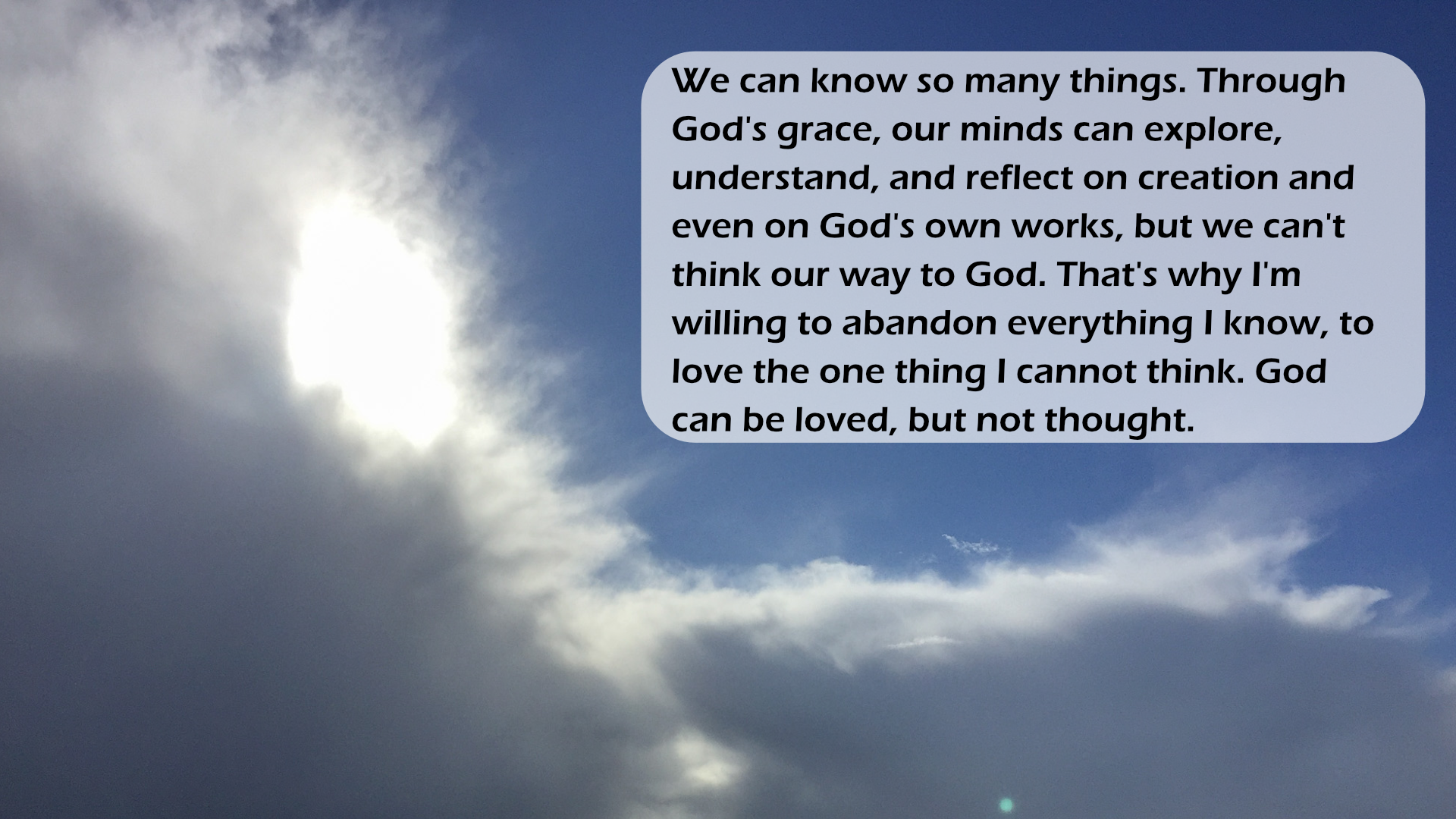
The goal is not simply knowing God, but union with God. It becomes not something we pursue, but something we yield to, surrender to, receive. As modern mystic Martin Laird wrote “Union with God is not something that needs to be acquired but realized.”
I find language or words about God increasingly insufficient. As the early Christian mystic Pseudo-Dionysius wrote “Thus now, as we plunge into the darkness beyond all understanding, we shall encounter not only brevity of speech but complete wordlessness and lack of understanding.” We say God is love. But God’s love is beyond what we can conceive of as love. I’m more content with saying “God is God, and we are not”, or “God is God and we are loved”.
From pursuing God, we move to a stance that looks more like surrendering to God. This approach looks like Mary’s “Let it be with me according to your word.”
While this all may seem very foreign to our Mennonite ears and just seem like Kevin going on another Catholic trip, a relevant word or concept that has been significant in Anabaptist history is the word “gelassenheit”.
An approximate English translation is yieldedness, and it is closely associated with humility and meekness. It describes a selfless, self-denying approach submitting ourselves to the will of God, the church, and others. For modern Anabaptist groups like the Hutterites, this submission is exercise in giving up private possessions. This gelassenheit is a stance of yielding my self-will and my ego to what is beyond me.
While this language of gelassenheit, or yielding, or surrender can seem challenging to modern sense of agency and self-empowerment – and everything has the potential for abuse – in it’s best sense these words direct us to a life of complete openness to God and God’s will in whatever way God comes to us.
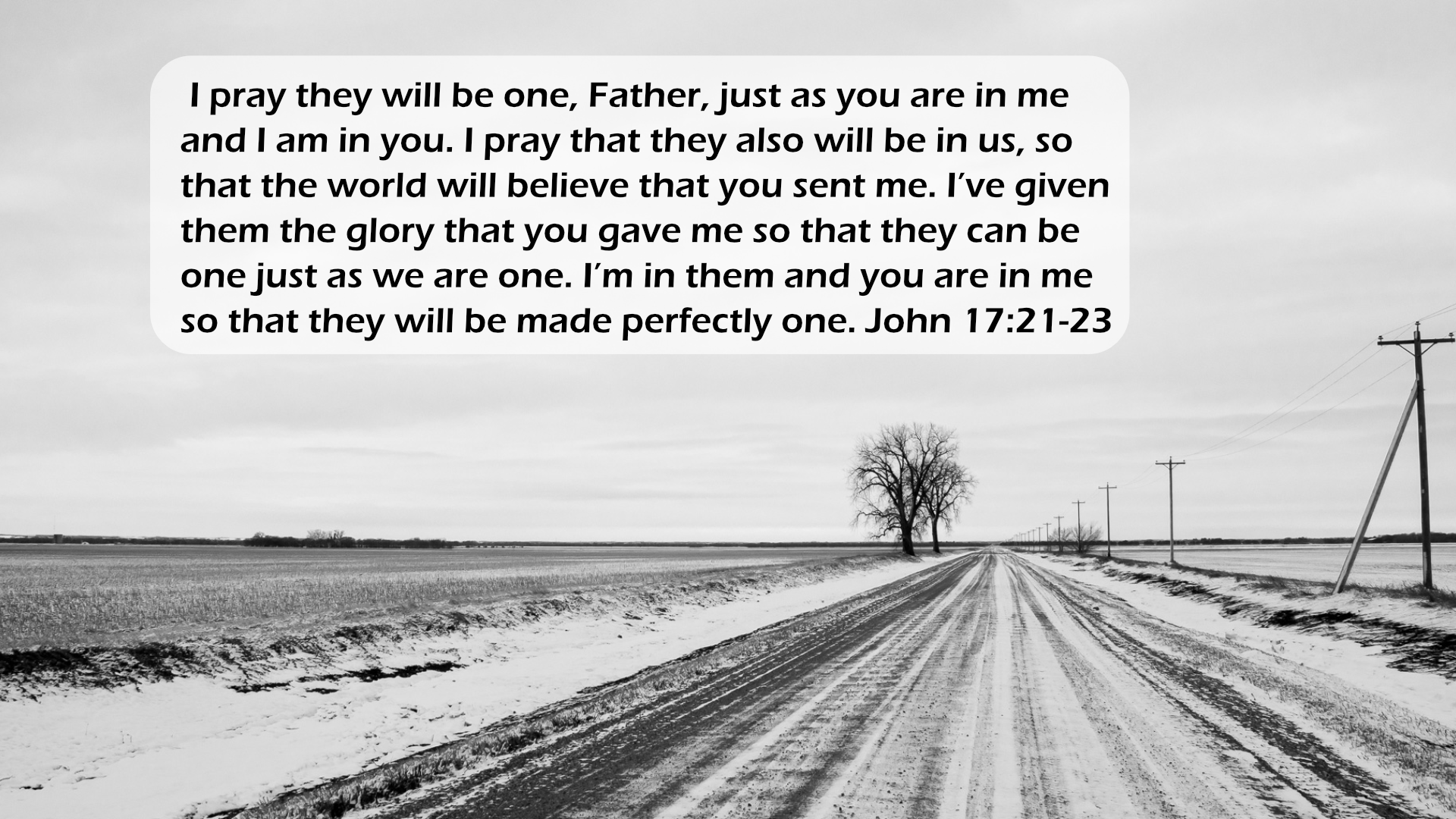
This life depicted in Jesus’ prayer for his disciples in John 17.
As I mentioned at the beginning of this sermon one of my various titles this is a move from Grasping onto God to Abandonment into God.
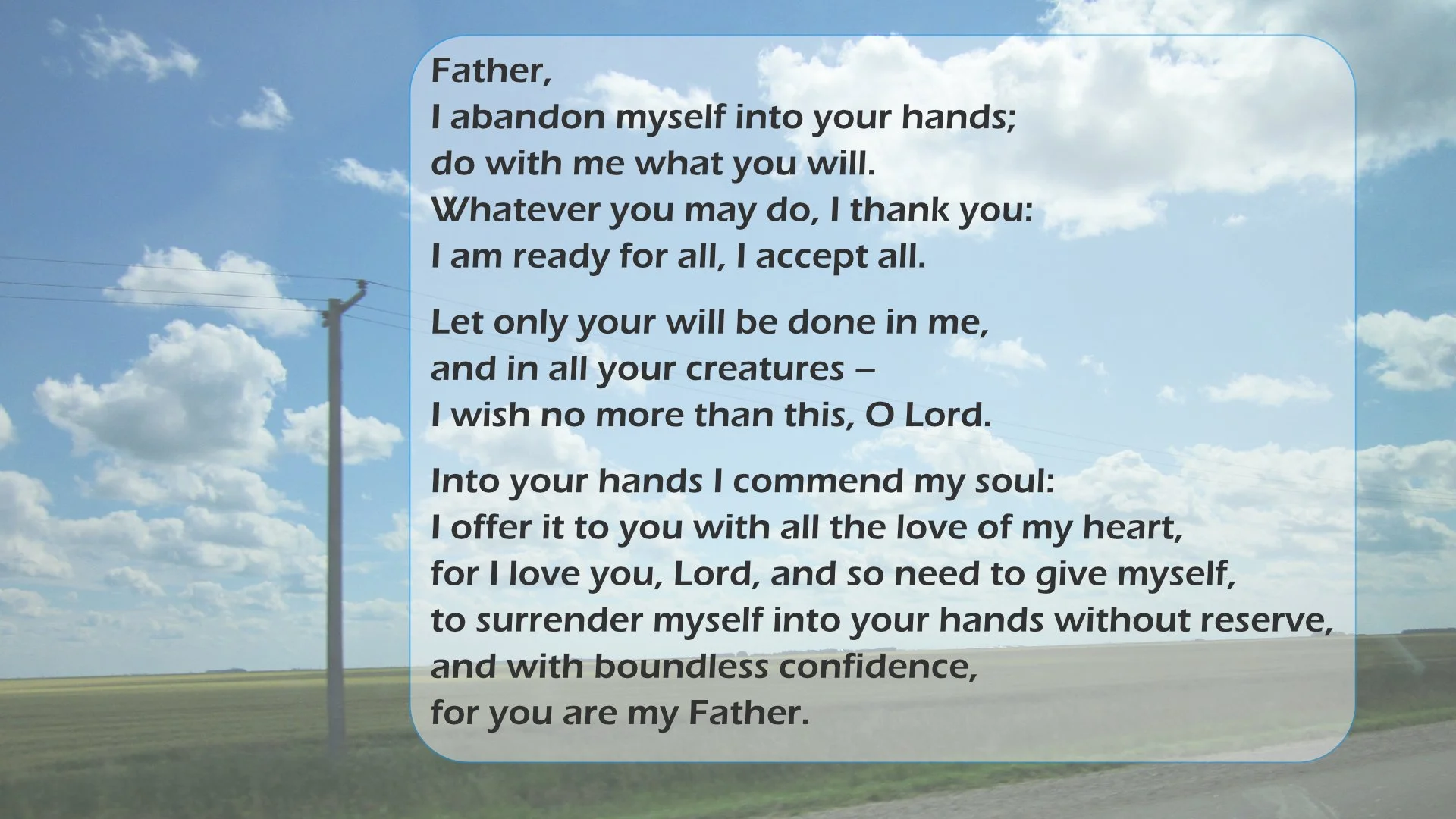
This brings me to the wonderful and powerful prayer of Abandonment by Charles de Foucauld. Granted it does stick with traditional paternal imagery for God. This could just as well be prayed to Mother God.
What does this curious journey into unknowing and gelassenheit have to say to our church today? As we as a congregation look ahead, and especially as we talk about size, growth, and vision, I pray that we don’t just strive and pursue a goal thinking that if we just do X, Y, or Z then we will get the results we want. Or that if only we work hard enough then things will change for the better. I pray that we remember that God is God and we are God’s children, and this is God’s church. We need to also remember to be attentive to, and yield with trust to the work God is doing in our midst, even if we are unsure what that work is. And know that we have no idea how things will turn out, but if we stay close to God, God will hold our hand.